Die With Your Boots On: Meaning, Origin, Usage & Examples?

Die With Your Boots On: Meaning, Origin, Usage & Examples?

Die With Your Boots On is an idiom and vivid expression about courage, bravery, boldness, and a purposeful lifestyle. As a metaphor, it describes staying active, engaged, and involved in meaningful activities instead of choosing inactivity or retiring from life. Its meaning connects with dedication, risk-taking, adventure, energy, readiness, determination, and a dynamic mindset. It … Read more

See vs. Look vs. Watch: The Complete Guide?

See vs. Look vs. Watch: The Complete Guide?

“See” vs. “Look” vs. “Watch” can confuse English learners because all three verbs relate to vision, but they show different levels of intent and attention. See means noticing something, look means directing your eyes toward something, and watch means observing something for a period of time. For example, you may see a bird, look at … Read more

What Are Conjunctive Adverbs? A Complete Guide With Examples?

What Are Conjunctive Adverbs? A Complete Guide With Examples

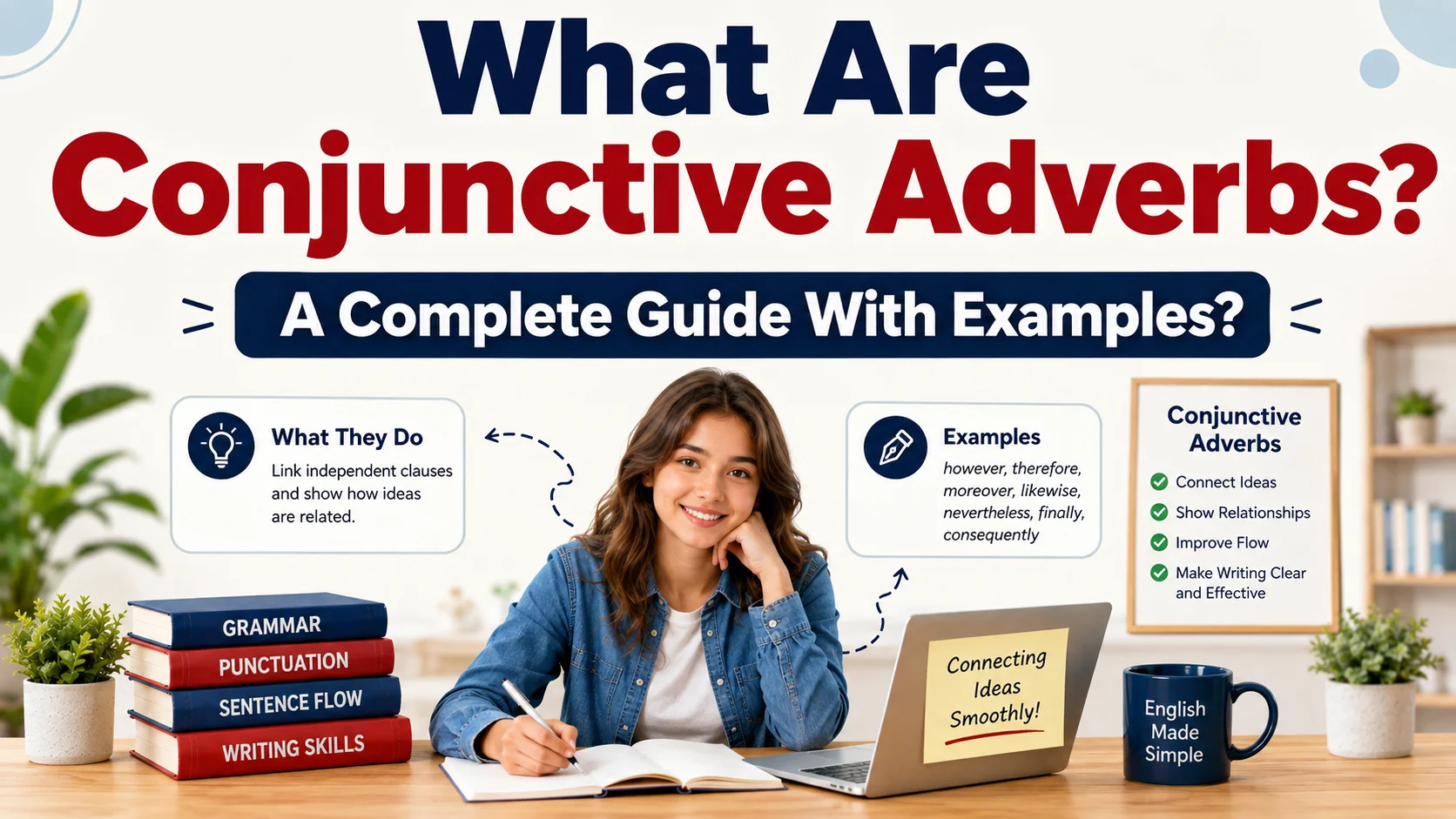
What Are Conjunctive Adverbs? They are adverbs that connect ideas and show a relationship between independent clauses. Words such as however, therefore, moreover, nevertheless, and consequently help show contrast, cause and effect, and addition. They make writing smoother and help guide the reader from one thought to another. Conjunctive adverbs work differently from conjunctions such … Read more

A or An Before a Number: Which One Is Correct?

A or An Before a Number: Which One Is Correct?

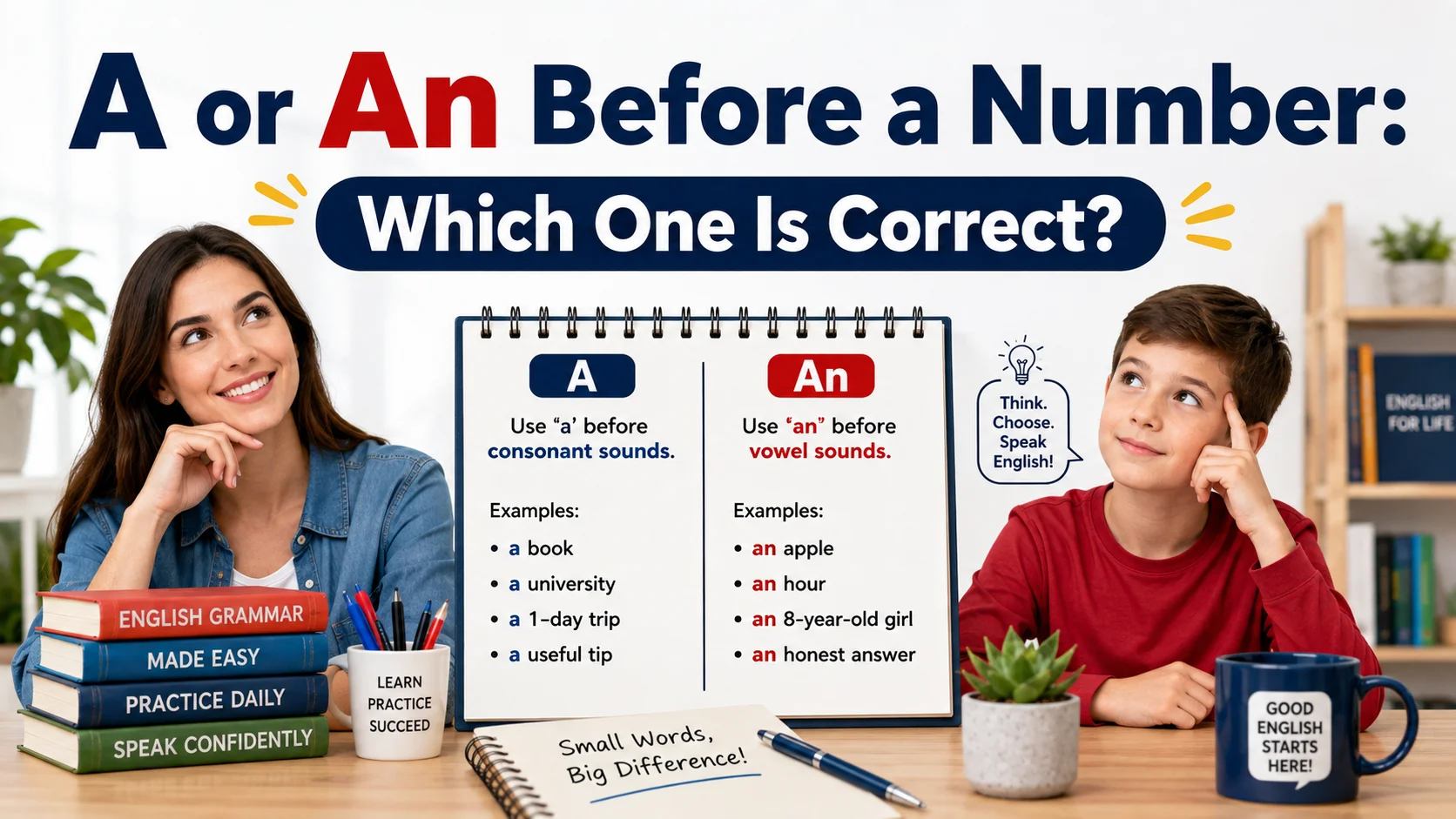
A or An Before a Number depends on pronunciation, not the written form. In English grammar, choose a before a consonant sound, such as a 10-minute break, and an before a vowel sound, such as an 8-minute break. The indefinite article, number word, digit, numeral, and initial sound guide the article choice. Say the number … Read more

Into or Onto: What’s the Difference? A Complete Guide

Into or Onto: What’s the Difference? A Complete Guide

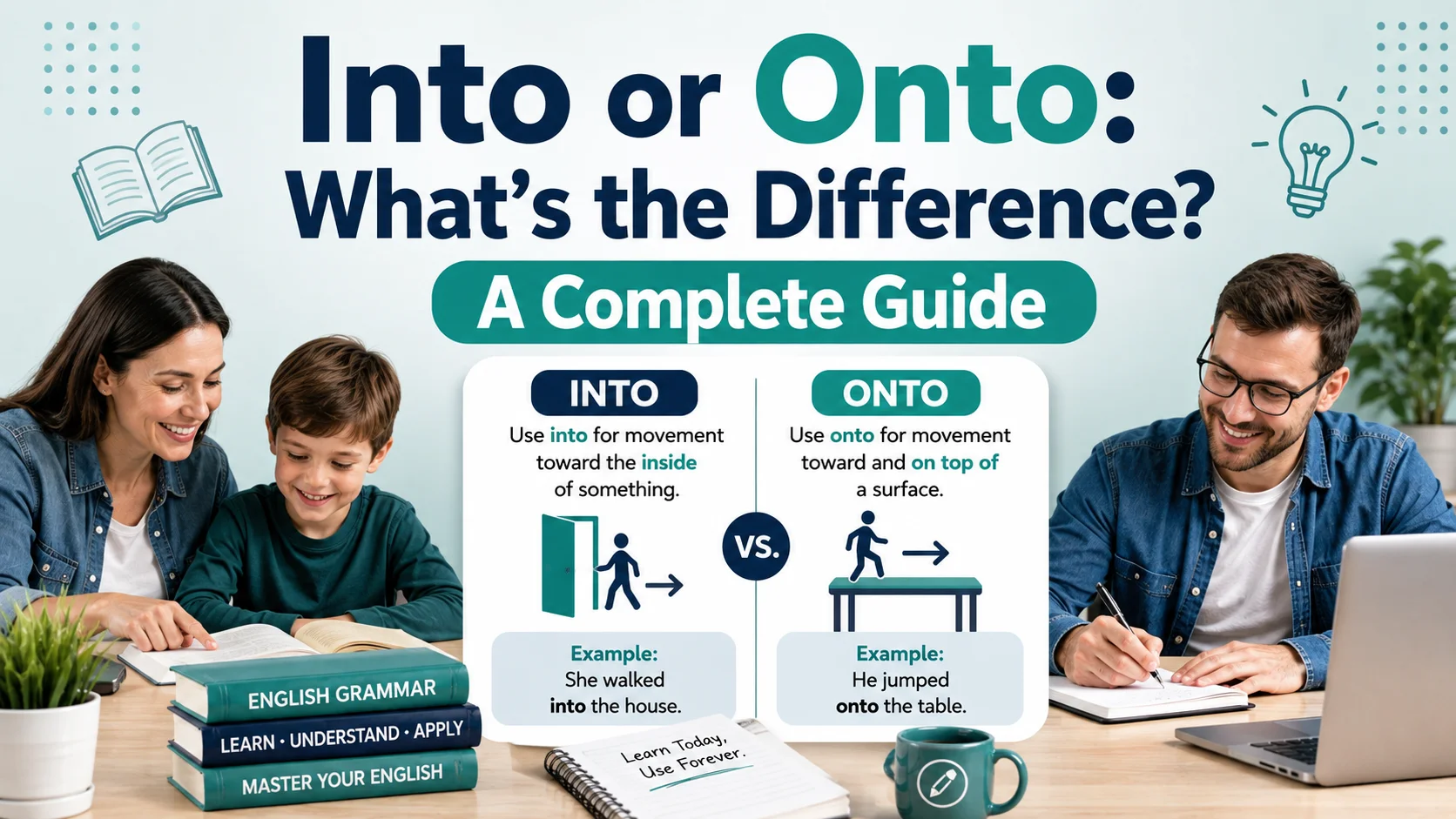
Understanding Into or Onto helps English learners choose the right prepositions for showing movement, direction, and position. The main difference between into and onto depends on where the action ends. Into shows movement from outside to inside, while onto shows movement toward a surface. For example, She walked into the room means she entered inside, … Read more