
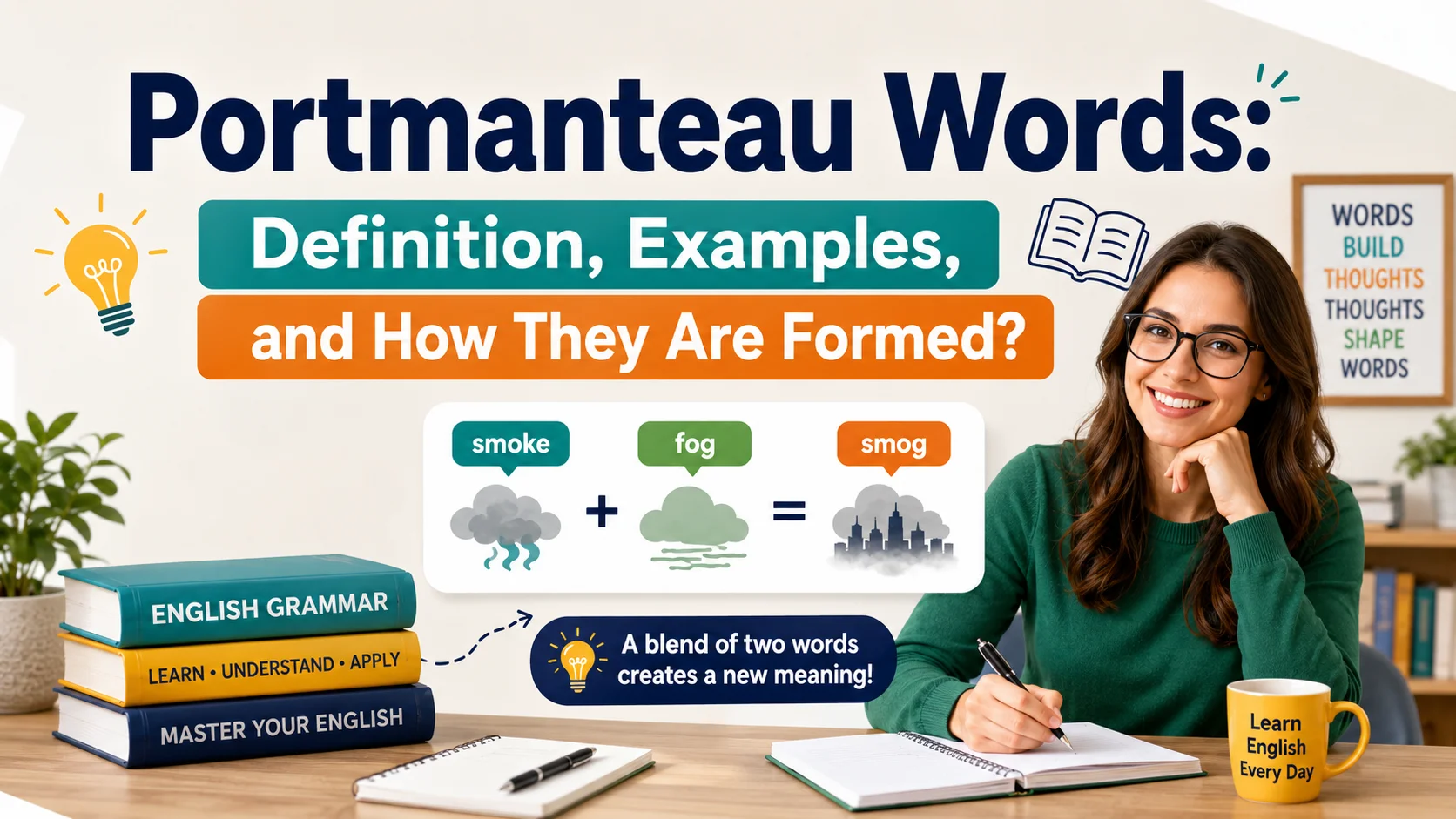
Portmanteau words shows how language grows through blending and word formation, creating combined words with fresh meaning and sound in English today. In American English, people often use Portmanteau Words without realizing their creative origins. A portmanteau word joins parts of two words to create a new meaning, a fresh sound, and a different way of speech. This word blending reflects lexical creativity, linguistic innovation, and the natural evolution of modern English. Examples like brunch from breakfast and lunch, or smog from smoke and fog, show how word creation makes everyday communication more engaging.
The process of creating these words involves combining initial segments, final segments, sounds, and meanings from originals to build new terms. The port-MAN-toe pronunciation helps learners recognize this unique linguistic phenomenon at a syllable level. These hybrid words connect ideas, word parts, and mental imagery like pieces of a puzzle, helping speakers create a vivid picture through imagination and creativity. The blending process, linguistic structure, word combination, and meaning attachment explain how cognition affects the way people communicate.
Understanding portmanteau words helps improve vocabulary development, follow language change, and recognize modern expressions used in everyday language, media, and business. Through usage, context, semantics, and phonetics, these words continue to shape conversations and support professional communication. The growth of spoken language, written language, and social communication depends on creative patterns such as hybrid lexical patterns, lexical creation, and semantic change, showing how English evolves through conversation, innovation, and changing cultural needs.
What Are Portmanteau Words? Understanding the Basics
A portmanteau word is a new word created by blending two existing words together. Usually, the beginning of one word combines with the ending of another word to create a shorter term with a combined meaning.
For example:
- Brunch = breakfast + lunch
- Smog = smoke + fog
- Motel = motor + hotel
Instead of saying “a meal between breakfast and lunch,” people simply say brunch. The new word saves time while keeping the original idea clear.
The term portmanteau comes from a French word that originally described a suitcase with two separate compartments. English writer Lewis Carroll introduced the linguistic meaning of the term in his 1871 novel Through the Looking-Glass.
In the story, Carroll explained that some words are like a suitcase because they carry two meanings packed together.
Portmanteau Words vs Compound Words
Many learners confuse portmanteaus with compound words. Although they seem similar, they work differently.
| Type | Definition | Examples |
| Portmanteau word | Combines parts of two words | Brunch, smog, webinar |
| Compound word | Joins complete words together | Toothbrush, football, bedroom |
| Acronym | Uses initial letters | NASA, FAQ |
| Clipping | Shortens one word | Ad, lab |
A compound word keeps the original words mostly intact. A portmanteau changes and blends them.
For example:
- Toothbrush = tooth + brush (compound word)
- Brunch = breakfast + lunch (portmanteau)
The History and Origins of Portmanteau Words
How the Term “Portmanteau” Entered Linguistics
Before becoming a grammar term, portmanteau described a type of travel bag. The bag had two sections that held separate items together.
Lewis Carroll borrowed this idea to describe words that carry two meanings at once.
In his famous poem “Jabberwocky,” Carroll created unusual blended words. One example is slithy, which combines “slimy” and “lithe.” These creative combinations showed how language could express complex ideas with fewer sounds.
Over time, linguists adopted the term to describe real-world word creation.
How Portmanteaus Became Common in English
English has always borrowed and created new vocabulary. However, portmanteaus became especially popular during periods of rapid change.
They grew because society needed quick names for:
- New inventions
- Scientific discoveries
- Cultural trends
- Digital technology
- Business concepts
For example, when online meetings became common, English created:
Webinar = web + seminar
Instead of saying “an online seminar,” people could use one simple word.
How Portmanteau Words Are Formed
Creating a successful portmanteau requires more than simply cutting two words together. The blend needs to sound natural and communicate a clear idea.
Blending Two Complete Words
Some portmanteaus combine recognizable parts of both original words.
Examples:
| Portmanteau | Original Words | Meaning |
| Motel | Motor + Hotel | A roadside place to stay |
| Blog | Web + Log | An online journal or article site |
| Smog | Smoke + Fog | Pollution caused by smoke and fog |
| Brunch | Breakfast + Lunch | A late morning meal |
These words became popular because people immediately understood the connection.
Combining Word Parts or Syllables
Many modern portmanteaus take only specific sections of each word.
Examples:
- Infotainment = information + entertainment
- Edutainment = education + entertainment
- Netiquette = internet + etiquette
The goal is not to preserve every letter. The goal is to create a word that feels natural.
The Importance of Sound and Pronunciation
A portmanteau must be easy to say. If a combination sounds awkward, people usually avoid using it.
Successful blends often have:
- Simple pronunciation
- Familiar sounds
- A clear meaning
- A memorable rhythm
For example, podcast sounds natural because it combines familiar parts:
iPod + broadcast = podcast
The word quickly became accepted because it was short and easy to remember.
Why Do People Create Portmanteau Words?
Portmanteaus Make Communication Faster
People naturally look for easier ways to communicate. A long explanation can often become one simple word.
Compare:
“a combination of web-based and seminar learning”
with:
“webinar”
The second option is faster and easier.
Portmanteaus Describe New Ideas
Technology and culture constantly create concepts that need names.
Examples:
- Cryptocurrency = cryptography + currency
- Malware = malicious + software
- Vlog = video + blog
Without these words, explaining modern concepts would take much longer.
Portmanteaus Add Creativity to Language
Blended words also make language more interesting. They often create humor, personality, and memorable expressions.
For example:
Frenemy = friend + enemy
This word describes someone who appears friendly but also acts like a rival.
The word became popular because it captured a complicated relationship in one simple term.
Common Portmanteau Words Used in American English Today
Many portmanteaus have become so common that most speakers no longer think about their origins.
| Portmanteau Word | Combination | Meaning |
| Brunch | Breakfast + Lunch | A meal between breakfast and lunch |
| Motel | Motor + Hotel | A roadside hotel |
| Smog | Smoke + Fog | Air pollution |
| Frenemy | Friend + Enemy | A fake or competitive friend |
| Webinar | Web + Seminar | An online educational event |
| Sitcom | Situation + Comedy | A television comedy format |
| Infomercial | Information + Commercial | A commercial that provides information |
| Mockumentary | Mock + Documentary | A fictional documentary-style production |
Technology Portmanteau Words
The technology industry creates new words faster than almost any other field.
Examples include:
Blog
- Web + log
- Originally referred to online journals
Podcast
- iPod + broadcast
- Refers to digital audio programs
Malware
- Malicious + software
- Refers to harmful computer programs
These words show how language adapts alongside innovation.
Business and Marketing Portmanteaus
Companies often use blended words because they are memorable.
Examples:
- Advertainment = advertising + entertainment
- Infomercial = information + commercial
- Crowdfunding = crowd + funding
A strong portmanteau can help a product or concept stand out in a crowded market.
The Role of Portmanteaus in Modern American Culture
American English frequently creates new blended words through entertainment, social media, and branding.
Portmanteaus in Media and Entertainment
Entertainment industries use portmanteaus to describe new genres and trends.
Examples:
Dramedy
- Drama + comedy
- A show combining serious and humorous elements
Mockumentary
- Mock + documentary
- A fictional story presented like a documentary
These terms allow audiences to quickly understand a style or format.
Portmanteaus in Brand Names
Many successful companies use creative naming strategies.
Examples:
- Microsoft = microcomputer + software
- Netflix combines internet-related naming with “flicks,” a casual term for movies
A memorable name can influence how people recognize and remember a company.
The Psychology Behind Why Portmanteau Words Work
How the Brain Understands Blended Words
Your brain is excellent at recognizing patterns. When you hear a new portmanteau, you often connect familiar pieces automatically.
For example:
Staycation
Even if you have never heard it before, you can guess:
Stay + vacation = vacation at home.
The word gives enough clues for your brain to understand the meaning.
Why Some Portmanteaus Become Popular
A successful blend usually has several qualities:
- Easy pronunciation
- Clear meaning
- Useful purpose
- Cultural relevance
- Frequent repetition
Words that meet these conditions spread quickly.
Why Some Portmanteaus Fail
Not every invented word survives.
Some disappear because they:
- Sound unnatural
- Lack a clear meaning
- Solve no communication problem
- Never gain public attention
Language users decide which words remain useful.
Portmanteau Words in American English Compared With Other Languages
Word blending is not unique to English. Many languages create similar combinations.
However, American English produces many portmanteaus because English has a flexible vocabulary system.
New blends often appear in:
- Technology
- Advertising
- Entertainment
- Science
- Social media
As global communication increases, languages continue borrowing ideas from each other and creating new expressions.
How to Recognize and Use Portmanteau Words Correctly
Learning to identify portmanteaus can improve your vocabulary skills.
Look for Hidden Word Connections
When you see an unfamiliar word, ask:
- Does it combine two familiar words?
- Can I identify the original parts?
- Does the meaning connect to both words?
For example:
Shopaholic
Shop + alcoholic
The word describes someone who feels addicted to shopping.
Consider Context Before Using New Blends
Some portmanteaus are formal, while others are casual.
Formal examples:
- Webinar
- Cryptocurrency
- Infomercial
Informal examples:
- Staycation
- Frenemy
- Bromance
Use words based on the situation.
The Future of Portmanteau Words in English
English will continue creating new blended words because society keeps changing.
Future portmanteaus will likely come from:
- Artificial intelligence
- Virtual reality
- Social media
- Environmental science
- New industries
As people discover new concepts, they need simple ways to describe them.
Portmanteaus act like linguistic shortcuts. They help English keep pace with a rapidly changing world.
Conclusion
Portmanteau words show the creativity and flexibility of the English language. By combining parts of existing words, speakers create new expressions with unique meanings, sounds, and uses. From common examples like brunch, smog, and motel to modern digital terms, these blended words continue to shape American English and everyday communication. Understanding how portmanteau words work helps you expand your vocabulary, recognize language changes, and appreciate how innovation influences the way people communicate.
FAQs
Q1. What is a Portmanteau word?
A Portmanteau word is a new word created by blending parts of two existing words. It combines their sounds and meanings to form a shorter expression with a new definition. For example, brunch combines breakfast and lunch.
Q2. Why are Portmanteau words important in English?
Portmanteau words are important because they show how English evolves through creativity and innovation. They help speakers create new terms for modern ideas, technologies, and cultural changes.
Q3. What are some common examples of Portmanteau words?
Some common examples include brunch (breakfast + lunch), smog (smoke + fog), motel (motor + hotel), and infotainment (information + entertainment). These words are now widely used in everyday communication.
Q4. How are Portmanteau words formed?
Portmanteau words are formed by combining parts of two words, such as their beginning sounds, ending segments, or important meanings. The blending process creates a new word that carries ideas from both original terms.
Q5. Are Portmanteau words common in modern English?
Yes, Portmanteau words are very common in modern English. They appear in daily conversations, media, business, and technology because they provide simple ways to describe new concepts and trends.
About The Author

